The Missing Link Between Pilot and Payload Operator Training
A special mission aircraft is only effective when the pilot, payload operator, sensor and mission objective work as one integrated system. This article explains why joint pilot–payload operator training is essential for ISR, mapping, surveillance and other fixed-wing special mission operations.
5/22/20266 min read
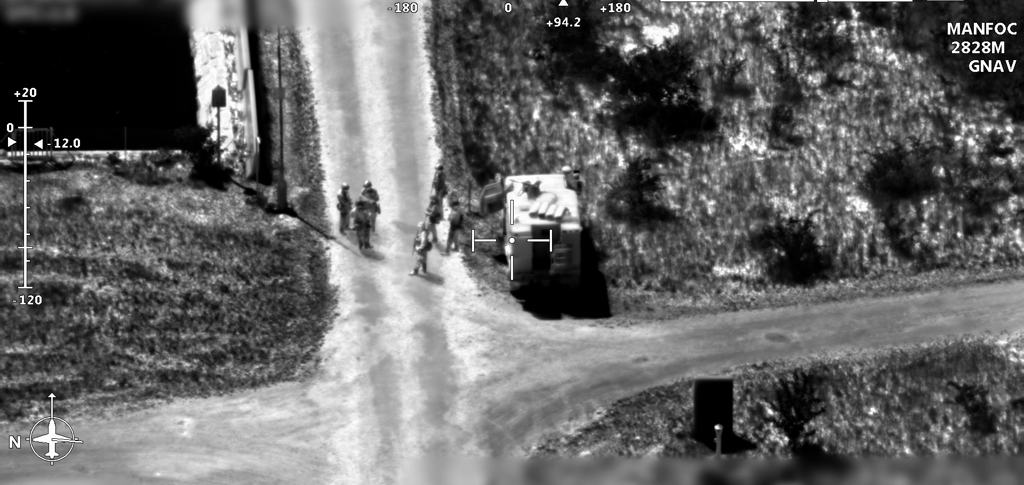
Why special mission effectiveness depends on more than flying the aircraft or operating the sensor
In special mission aviation, the aircraft is rarely the complete capability by itself. A well-equipped platform, a high-performance sensor and a qualified crew are all essential, but they do not automatically create an effective mission system.
The real capability emerges when the pilot, the payload operator, the aircraft, the sensor and the mission objective work together as one coordinated unit.
This is where many operators underestimate the challenge.
A pilot may be experienced on type. A payload operator may understand the camera, radar, mapping system or mission equipment. The aircraft may be airworthy and technically ready. Yet during real operations, the mission can still become inefficient, unstable or workload-intensive if the crew has not been trained to operate as an integrated team.
Special mission flying is not simply “flying the aircraft while someone else operates the sensor”. It is a coordinated task in which aircraft handling, mission geometry, communication discipline and payload performance are closely connected.
The aircraft is the platform, not the mission
In conventional operations, success is often measured by safely and efficiently transporting people or equipment from one point to another. In special mission aviation, the aircraft is used as a platform to observe, collect, map, monitor or support.
This changes the role of the pilot.
The pilot remains responsible for the safe conduct of the flight, compliance with applicable rules, aircraft limitations, airspace requirements and operator procedures. But beyond that, the pilot also has a direct influence on mission quality.
Altitude, speed, bank angle, turn radius, distance from the target area, sun angle, wind correction, turbulence management and flight path stability can all affect the performance of the payload and the operators.
For the payload operator, the aircraft is not just transportation. It is the moving base from which the sensor works. If the aircraft is unstable, incorrectly positioned or flown without regard to sensor requirements, even a capable payload may not deliver the expected result.
This is why pilot and payload operator training should not be treated as two separate worlds.
Stable platform does not simply mean smooth flying
One of the most common misunderstandings in special mission flying is the idea that providing a stable platform only means flying smoothly.
Smooth flying is important, but it is not enough.
A stable mission platform means that the aircraft is positioned and flown in a way that supports the sensor, the operator and the mission objective. Depending on the task, this may require a steady orbit, a defined offset, a precise ground track, a specific altitude band, a controlled bank angle or a repeatable pattern.
For an ISR or surveillance profile, the payload operator may need a predictable line of sight to the target area. For mapping, the aircraft may need accurate track keeping, speed discipline and consistent altitude. For search and rescue support, the crew may need to balance visual search, sensor coverage, communications and fuel endurance.
The difference between a useful sensor picture and a frustrating mission is often not the sensor itself. It is the geometry between the aircraft, the target, the terrain, the weather, the light conditions and the flight path.
Mission geometry is a crew task
Orbit, offset and target geometry are not abstract concepts. They are practical flying and coordination issues.
If the aircraft is too close to the target, the payload operator may struggle with excessive angular movement, steep viewing angles or constant repositioning. If the aircraft is too far away, the sensor may lose detail or become less effective. If the bank angle is too high or the orbit is unstable, the operator may have difficulty maintaining the area of interest, or equipments can go inaccurate.
These issues are rarely solved by one crew member alone.
The pilot needs to understand enough about the payload to anticipate what kind of flight path supports the mission. The payload operator needs to understand enough about the aircraft to make requests that are realistic, safe and operationally useful.
For example, “turn left” is usually less helpful than a clear mission-oriented request such as adjusting the orbit, increasing offset, extending the leg or repositioning for a better viewing angle. Similarly, the pilot should not only fly the pattern mechanically, but should understand why a particular position or manoeuvre is being requested.
This shared understanding is the missing link in many special mission training programs.
Communication is part of the mission system
In special mission aviation, internal crew communication is not a soft skill. It is part of the mission system.
The crew needs a common language for target acquisition, repositioning, orbit corrections, search areas, sensor limitations, timing and priorities. Without this, the cockpit can quickly become reactive. The payload operator asks for corrections, the pilot tries to interpret them, the aircraft moves, the sensor picture changes, and both crew members spend more energy correcting the situation than executing the mission.
Good crew coordination reduces this friction.
The goal is not to make the pilot a sensor specialist or the payload operator a pilot. The goal is to create enough overlap in understanding that both can support each other effectively.
The pilot should understand the operational consequences of aircraft movement on the payload. The payload operator should understand aircraft performance, workload, safety margins, airspace constraints and why some requests may not be immediately possible.
This becomes especially important in busy environments, at low altitude, near controlled airspace, in degraded weather, during long endurance missions or when the crew is operating under time pressure.
The typical training gap
Many crews are trained in separate blocks.
Pilots complete aircraft training, differences training, route training or mission-related familiarisation. Payload operators receive instruction on the sensor, workstation, software and mission equipment. Both may be competent in their own areas.
The problem appears when they are expected to perform as one crew without enough joint scenario-based training.
This can lead to predictable issues:
the aircraft is flown safely but not optimally for the payload;
the sensor is operated correctly but without realistic aircraft handling constraints;
communication becomes vague or late;
the crew lacks standard calls for repositioning and target work;
the mission plan does not translate well into airborne execution;
valuable flight hours are spent discovering avoidable workflow problems.
These are not necessarily signs of poor professionalism. They are often signs that special mission training has not been integrated properly.
The cost of not training together
The most expensive way to build special mission experience is to learn every lesson during live operations.
Without integrated training, operators may spend unnecessary flight hours refining basic coordination. Missions may take longer than required. Sensor output may be inconsistent. Crews may become frustrated because each side believes the other does not fully understand the task. In some cases, procedures develop informally, without being captured in a repeatable SOP or training structure.
This creates a capability that depends too much on individual personalities rather than a robust operational system.
A mature special mission operation should not rely only on “good people making it work”. It should provide crews with a shared method, clear procedures and realistic training.
From aircraft delivery to real mission readiness
A special mission aircraft can be technically delivered, equipped and ready to fly. But true mission readiness requires more.
It requires crews who understand the mission, not only the aircraft. It requires payload operators who understand the flight environment, not only the sensor. It requires procedures that connect planning, flying, operating and debriefing into one repeatable process.
For platforms such as the DA62 MPP and other fixed-wing special mission aircraft, this integration is particularly important. These aircraft can provide efficient endurance, flexible operating costs and valuable mission capability, but their effectiveness depends heavily on how well the crew uses the platform.
The mission is not created by the aircraft alone. It is created by the way the aircraft is flown, the way the payload is operated and the way the crew works together.
That is why pilot and payload operator training should not be treated as two separate disciplines.
How SMN Support can assist
SMN Support helps special mission operators bridge the gap between aircraft capability and operational readiness.
Our work focuses on mission-specific training, pilot and payload operator coordination, mission planning, SOP development and on-site operational support for fixed-wing special mission operations.
For operators preparing for DA62 MPP, ISR, mapping, surveillance, remote sensing or related mission profiles, integrated crew training can help reduce avoidable inefficiencies and turn a capable aircraft into a more effective mission platform.
Support
Expert training and support for Special Mission operators.
Email:
© 2025. All rights reserved.